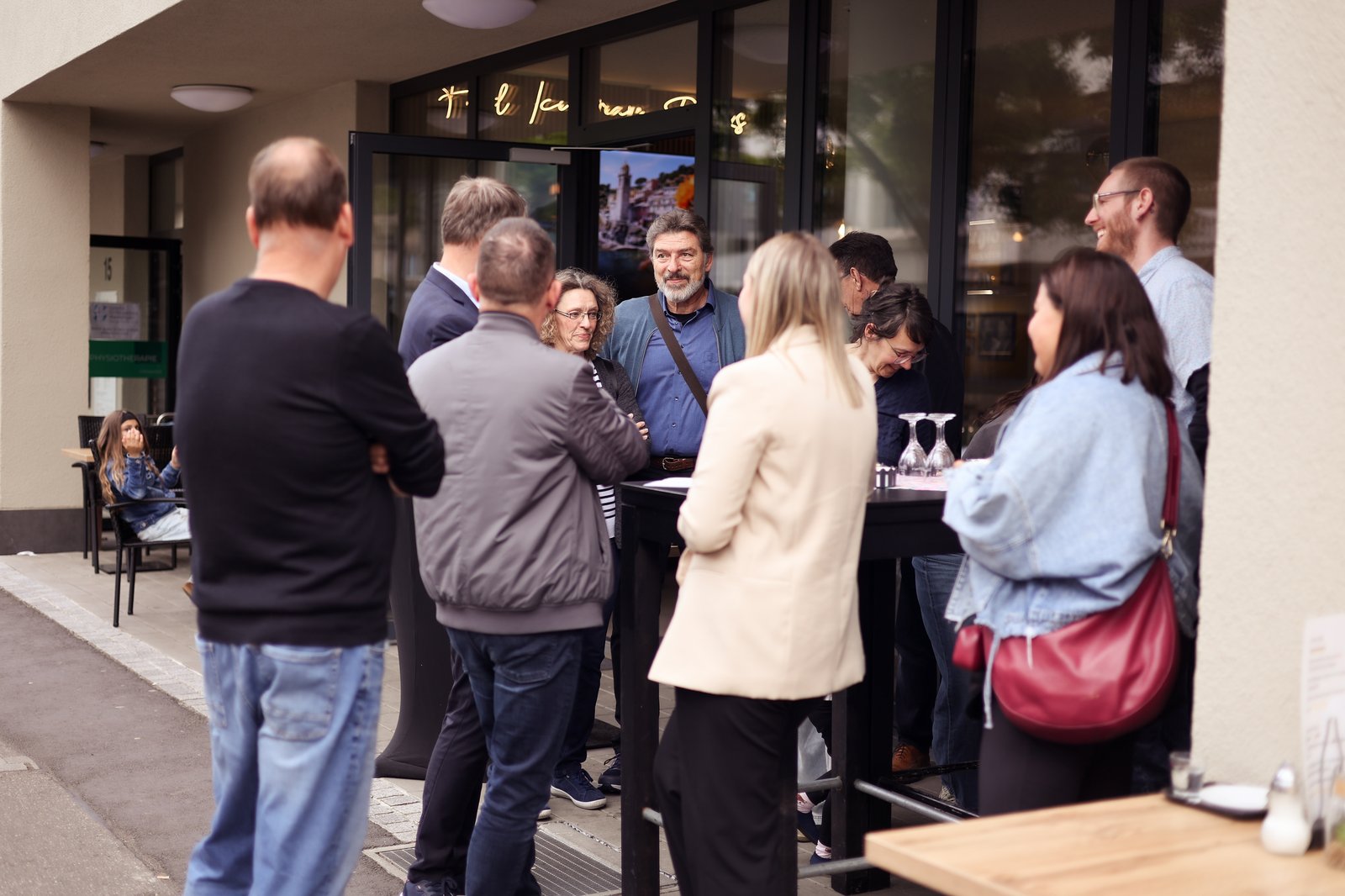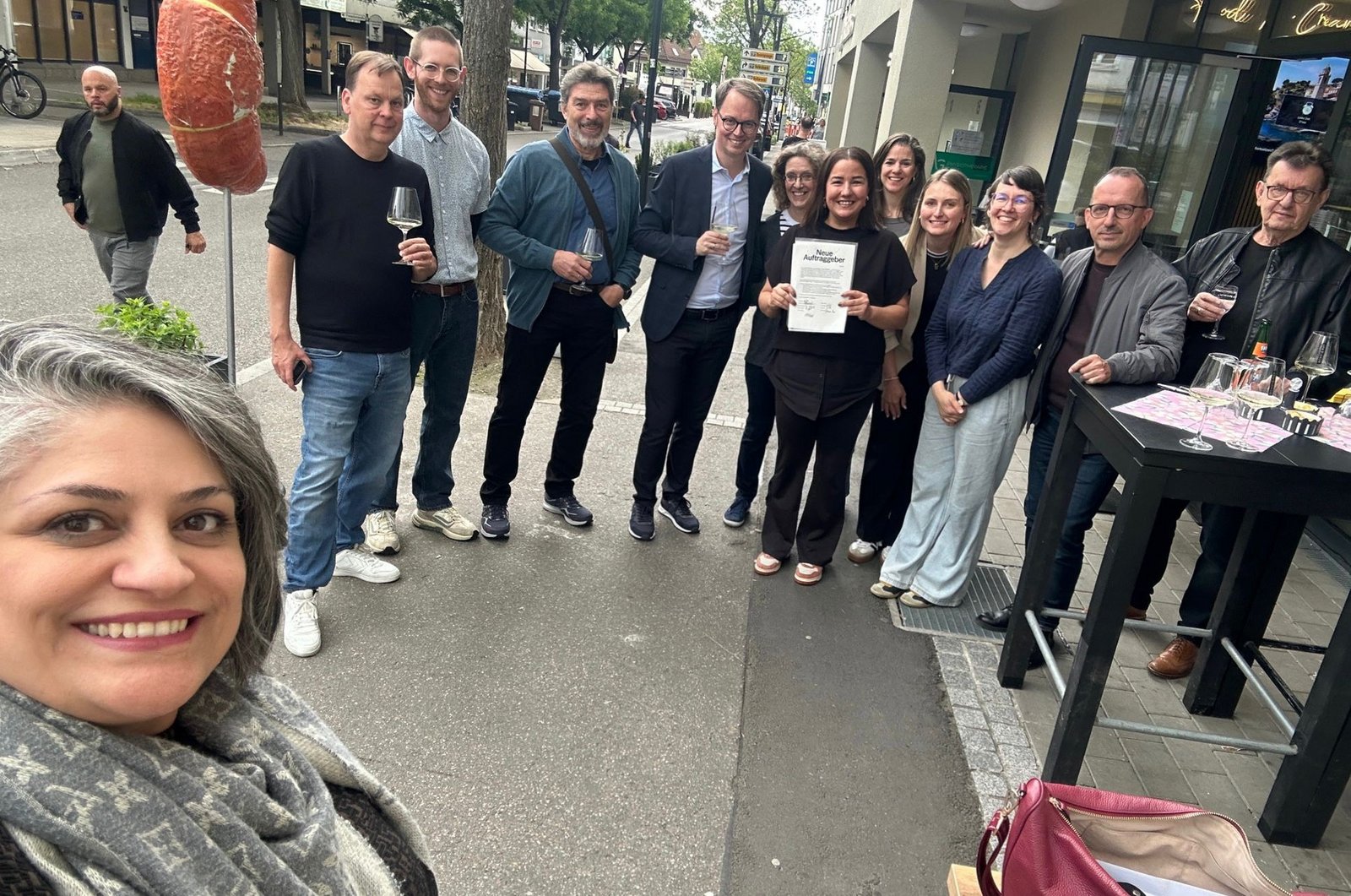
Patrons: Merve Kap, Fereshteh Arman, Roswitha Nagel, Roland Nagel, Saverio Mazzei, Thomas Vuk, Daisy Dedner, Anselm Kick, Laura Utz, Hans Karl Zeisel
Commission: We envision an artistic intervention that gives Fronackerstraße a distinctive, recognizable character – one that invites people to linger, to meet, and to tell stories. Three qualities are important for the commissioned work: Something blooming, something to stay for, and something playful.
Mediator: Boglárka Pap
Project Lead: Künstlerhaus Stuttgart
Period: In progress since 2026
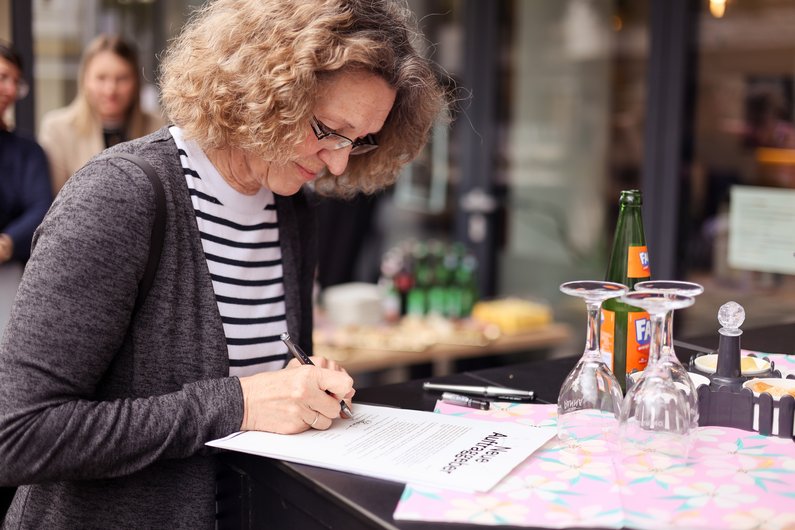
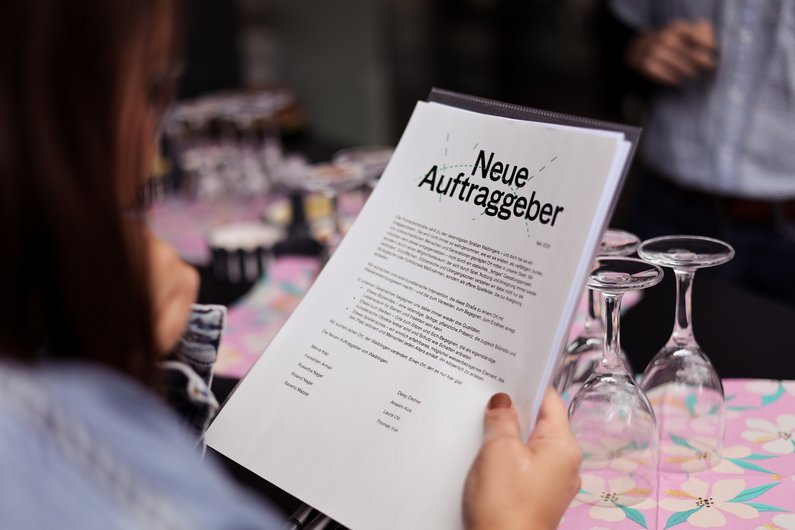
In May 2026, the New Patrons of Waiblingen signed their commission. Residents and local business owners have come together to jointly consider how they want to use, experience, and playfully appropriate their Fronackerstraße in the future.
Fronackerstraße is one of Waiblingen's most vibrant streets – and yet it has an image problem. It is not always perceived the way the group of patrons experiences it: as a diverse, colorful place, shaped by different people and generations, right in the heart of the city. The group wants to counter this – not with a static, "finished" design project, but with a space of possibility that continually transforms through play, use, and appropriation.
The New Patrons of Waiblingen envision an artistic intervention that gives this street a distinctive, recognizable character – one that invites people to linger, to meet, and to tell stories. At the heart of the commission is the transformation of Fronackerstraße into a versatile urban space that deliberately opens up room for play.
In conversations, three qualities kept emerging again and again that are important for the New Patrons of Waiblingen: There should be something blooming – a vibrant, colorful, botanical presence that can serve both as a visual motif and as a habitat for bees and insects. Just as important, there should also be something to stay for – places to sit and meet one another, readable as artistic objects in their own right, offering shelter and shade. And last but not least, there should be something playful – a sensory, ideally water-related element that activates the space and invites people of all ages to experience it physically.
Green areas – such as planted islands, flower beds, or unsealed zones – are understood by the group not merely as ecological measures, but as open playing fields that invite appropriation. Different areas for lingering should emerge as flexible settings: seating becomes meeting points or stages, shaded spots become places of retreat or storytelling, transitional areas become zones for movement, interaction, and improvisation.